
Glass Transition Temperature Determination: Assess the thermal stability of your plastics

What does a glass transition temperature determination mean and why is it important?
Glass transition temperature (Tg) determination is a thermal analysis method that measures the temperature at which an amorphous material, such as plastic, changes from a glassy, rigid state to a more rubbery and flexible state. At Deon Research Centre, Tg determination is crucial for evaluating the thermal stability and performance of materials in operating environments. It helps to understand the applicability of plastics in various applications, including packaging, construction materials, and consumer electronics.

Why choose for a glass transition temperature determination at Deon Research Centre?
By choosing to determine the Tg at Deon Research Centre, you benefit from:
- In-depth insight into material properties: understand how your plastics behave under temperature changes.
- Optimization of product designs: use results to develop products that perform better in their operating conditions.
- Avoiding failure: identify the temperature limits for your materials and minimize risks of failure in practice.
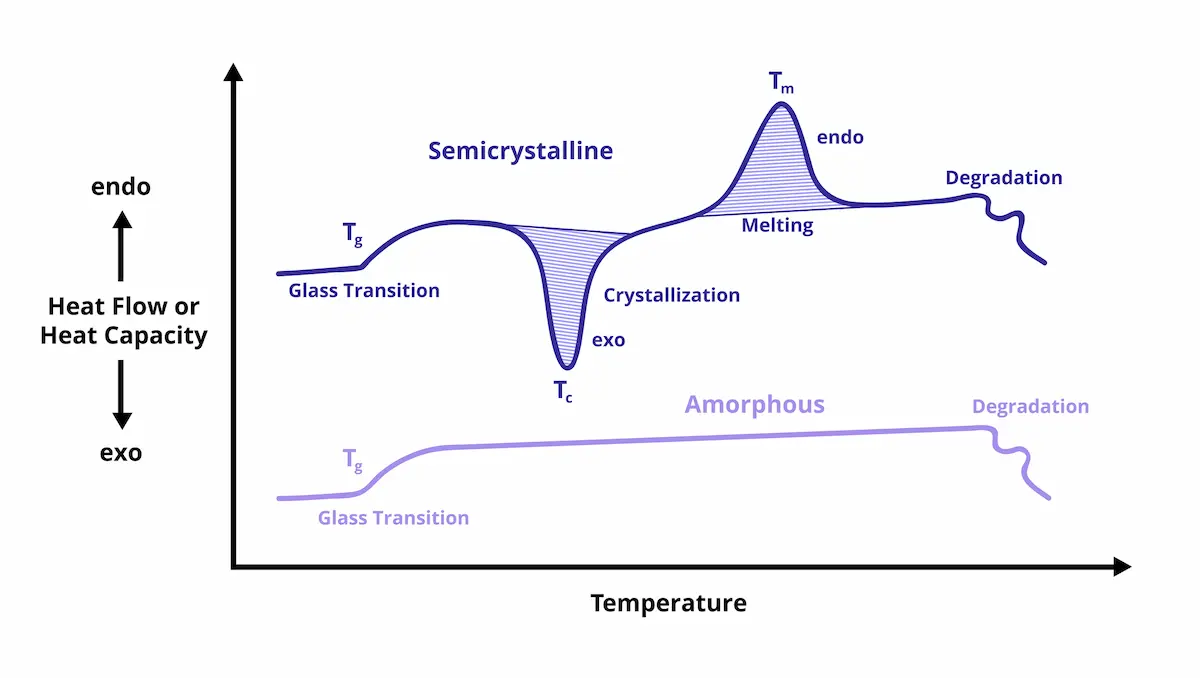
How does a glass transition temperature determination work?
The Tg can be determined using various analysis techniques, each of which provides insight into this transition area in its own way:
- Differential Scanning Calorimetry (DSC): measure heat flows during controlled heating or cooling. The glass transition is visible as a change in the heat capacity of the material.
- Thermomechanical Analysis (TMA): records changes in the length or volume of a sample under the influence of temperature and load. The glass transition is evident from a clear change in thermal expansion.
- Dynamic Mechanical Analysis (DMA): determines the stiffness and damping of a material at varying temperatures and frequencies. The glass transition is visible through a sharp change in the mechanical response.
Applications of glass transition temperature determinations in the industry
At Deon Research Centre, we are involved in the application of Tg determination in various sectors:
- Packaging industry: ensure that packaging materials continue to function effectively at different temperatures.
- Electronics: testing components that are exposed to various thermal stresses.
- Building and construction: evaluating the performance of plastics used in construction applications.
What does this mean for your company?
By investing in a glass transition temperature determination at Deon Research Centre, you will achieve:
- Increased product reliability and a longer lifespan of your plastics.
- Insight into thermal performance to make better product choices.
- Compliance with quality and safety standards that are essential for market acceptance.

We offer comprehensive glass transition temperature determination services at Deon Research Centre!
Are you curious about how our glass transition temperature regulations can optimize your products? Our team offers expert services that ensure that your materials meet the highest quality standards. Contact us for more information and find out how we can support your business with high-quality thermal analysis!
Contact us directly +31 (0) 6 51 06 02 62