Tear tests: Assess the durability and toughness of materials

What are tear tests and why are they important?
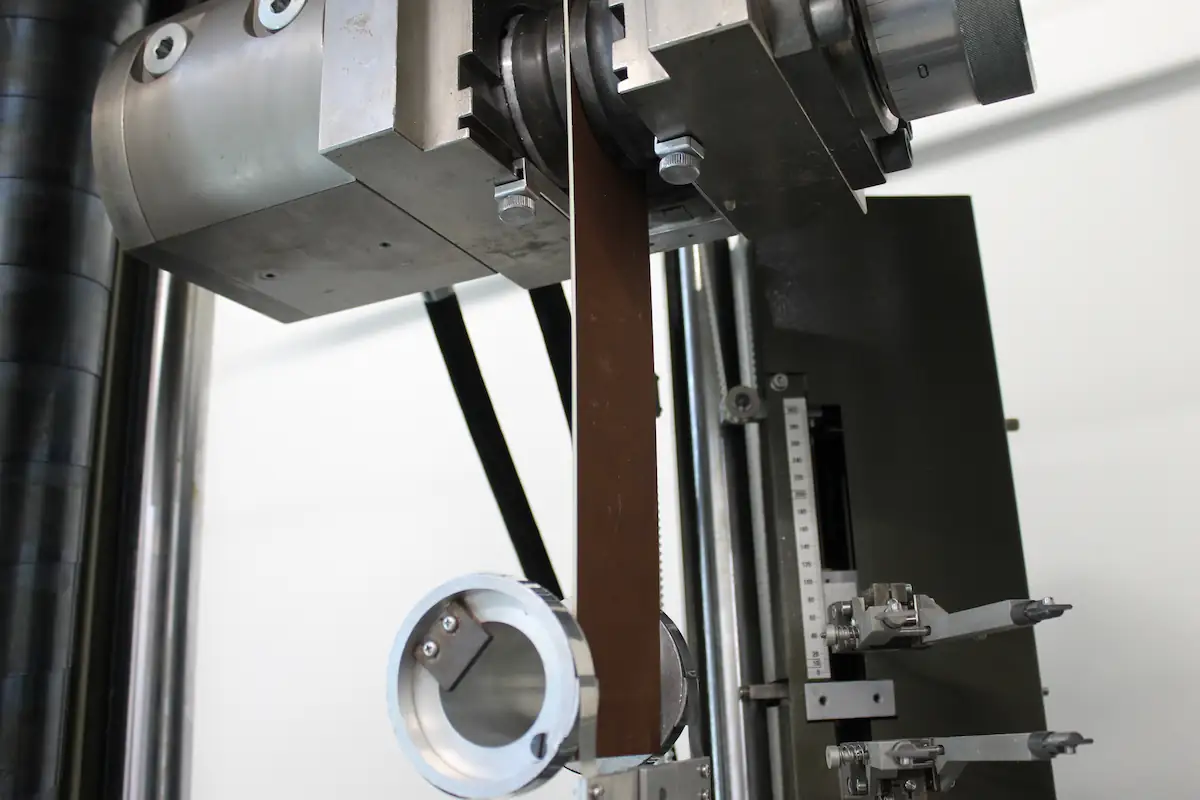
Tear tests are crucial evaluations performed to measure the resistance of materials to tear and growth. At Deon Research Centre, these tests are essential in sectors such as aviation, automotive and construction, where materials are regularly exposed to mechanical stress. By performing tear tests, you can ensure the safety and performance of your products.
Why choose tear tests at Deon Research Centre?
Do you want to ensure the tear resistance of your materials? Our professional services offer:
- Insight into material behavior: understand how your materials react to rapid stress and cracking.
- Increased safety: develop products that are resistant to breakage and prevent profound damage.
- Reliable quality control: ensure that your products meet strict standards and regulations.
Important standards and tests
- ASTM D1781: This standardized test method measures the peel strength of laminates and is often used to assess tear resistance in laminated materials. The results of this test provide important information about the adhesion and durability of various materials.
- G1c Crack Energy: the G1c value indicates the critical energy release rate required to initiate and propagate a crack in a material. This is an important parameter that helps assess the toughness of materials under different conditions.
- G2c Crack Energy: G2C measurements focus on the interlaminar toughness of composites, assessing the resistance to cracking types between layers in a laminate. This is critical to understanding the strength and durability of laminated materials.
How do tear tests work?
The test process involves exposing material to controlled forces, that can cause a material to tear, to evaluate resistance and durability:
- Tear test: determines the force required to propagate a crack through a material.
- Break/toughness test: measures material properties that resist the aggravation of cracks.
During the tear tests, we focus on important properties such as:
- Tear resistance: the ability of a material to resist cracking under specific conditions.
- Adhesion and bonding: The strength of the interaction between laminates.
- Fracture mechanism: analysis of the processes that lead to crack initiation and growth.
Applications of tear tests in industry
At Deon Research Centre, we are involved in performing tear tests in various sectors:
- Aeronautics and space: identifying defects in components that are exposed to high stress conditions.
- Automotive: analysing damage in materials to improve the safety and durability of vehicles.
- Building and construction: investigating material failures in structures to ensure integrity and durability.
What does this mean for your company?
By performing tear tests, you will achieve:
- Increased product reliability and reduction of risks of material breakage.
- Compliance with standards that are essential for customer satisfaction and market entry.
- Improved competitive position by delivering sustainable and safe products.

We offer comprehensive tear testing services at Deon Research Centre!
Curious about how our tear tests can optimize your products? Our team offers expert services that ensure that your materials meet the highest standards. Contact us for more information and find out how we can support your business with in-depth material testing!
Contact us directly +31 (0) 6 51 06 02 62