
Compression test: Evaluation of metals, plastics and fibre-reinforced plastics

What are compression tests?
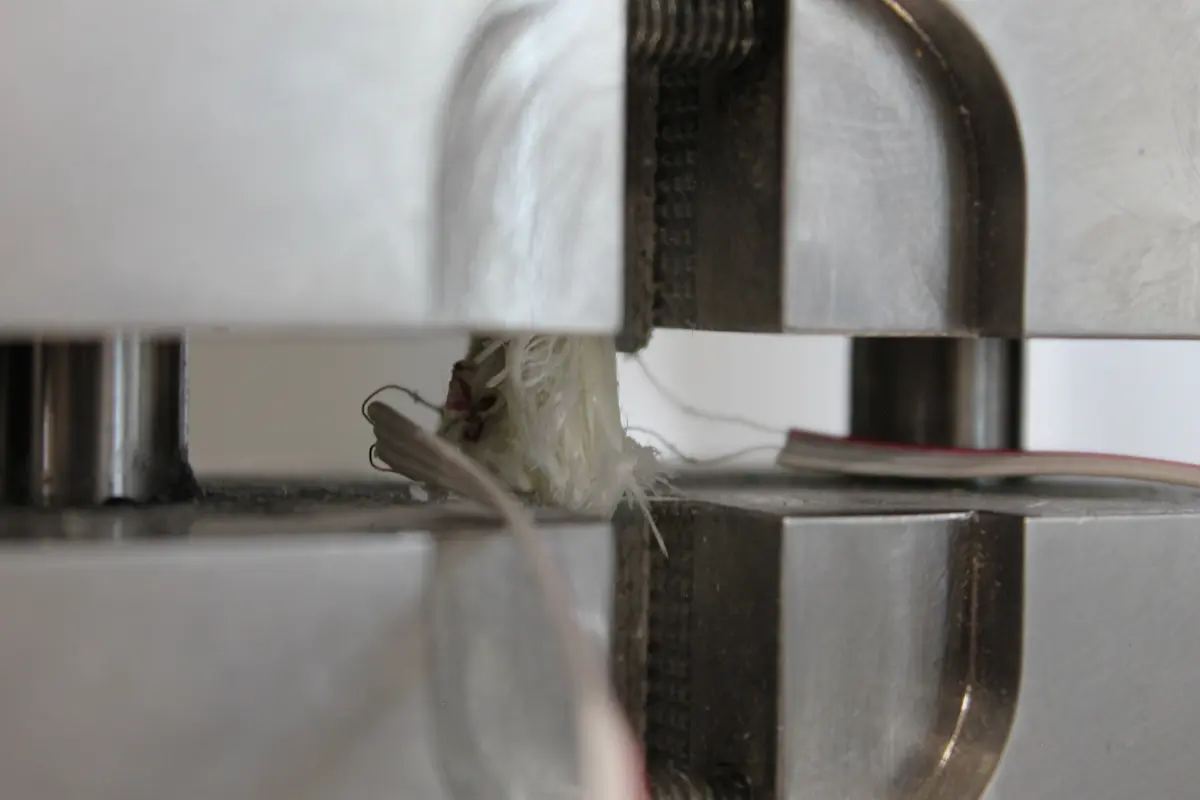
Compression tests are mechanical tests performed to assess the strength and stiffness of materials when exposed to compressive loads. At Deon Research Centre, these tests are essential for obtaining important data on the mechanical properties of materials, such as their elastic modulus, yield strength, and maximum compressive strength. Compression tests are performed on a variety of materials, including metals, plastics and fibre-reinforced plastics.
Why are compression tests important?
Compression testing is crucial for a variety of industries, including construction, automotive, aviation, and consumer electronics. It provides insight into the performance and reliability of materials under pressure, leading to:
- Quality control: manufacturers can ensure that their products meet the required strength and quality standards.
- Material selection: Engineers use compression test results to choose the right materials for specific applications, depending on pressure and load requirements.
- Structure design: When designing structures, it is crucial to understand how materials behave under compressive stress, which helps ensure structural integrity.
How do compression tests work?
The process of compression testing involves several steps:
Sample setup: Before the test, a standard sample of the material is prepared according to specifications.
Placement in test equipment: the sample is placed in a testing machine, which applies pressure to the sample evenly and in a controlled manner.
Applying compressive forces: the test machine gradually increases the pressure on the sample until it fails or until a predetermined value is reached.
Information gathering: During the test, data such as the applied force and the associated distortion are collected. This data is analysed to determine important mechanical properties.
Compression tests by material type
Metals: Compression tests of metals such as steel, aluminum, and copper are often performed to determine their strength and stiffness. Important standards for metal compression tests include:
- ASTM E8/E8M: standard test method for tensile and compression tests of steel and other metals.
- ISO 6892: test methods for tensile tests on metals, with special attention to compression.
Plastics: Plastics such as polyethylene (PE), polypropylene (PP), and polyvinyl chloride (PVC) are subject to compression tests to assess their mechanical properties. Important standards for plastics include:
- ASTM D695: Standard Test Method for Compression Testing of Plastics.
- ISO 604: method for compression testing of thermoplastic and thermosetting plastics.
Fibre-reinforced plastics: For fibre-reinforced plastics, such as glass fiber reinforced plastic and carbon fiber reinforced plastic, compression tests are crucial. Some of the relevant standards include:
- ASTM D3410: Test methods for the compressive strength of fibre-reinforced materials.
- ISO 14126: test method for determining the compressive properties of fibre-reinforced plastic materials.
Applications of compression testing in industry
At Deon Research Centre, we are involved in the application of compression tests in various sectors:
- Aeronautics and space: assessment of the strength of connections and structures that are exposed to heavy loads and shocks.
- Automotive: safety testing of vehicle components, such as chassis and body panels.
- Building and construction: ensure the structural integrity of building materials.
What does this mean for your company?
By investing in compression tests, you will achieve:
- Increased product reliability and durability of your products.
- Compliance with industry standards that are essential for customer satisfaction and market acceptance.
- Efficiency in innovation through detailed insights into material properties and performance.

We offer comprehensive compression testing services at Deon Research Centre!
Curious about how our compression tests can improve your products? Our team offers expert services that ensure that your materials meet the highest quality standards. Contact us for more information and find out how we can support your business with in-depth material testing!
Contact us directly +31 (0) 6 51 06 02 62