
Creep tests: Assess the long-term performance of materials on creep

What are creep tests and why are they crucial?
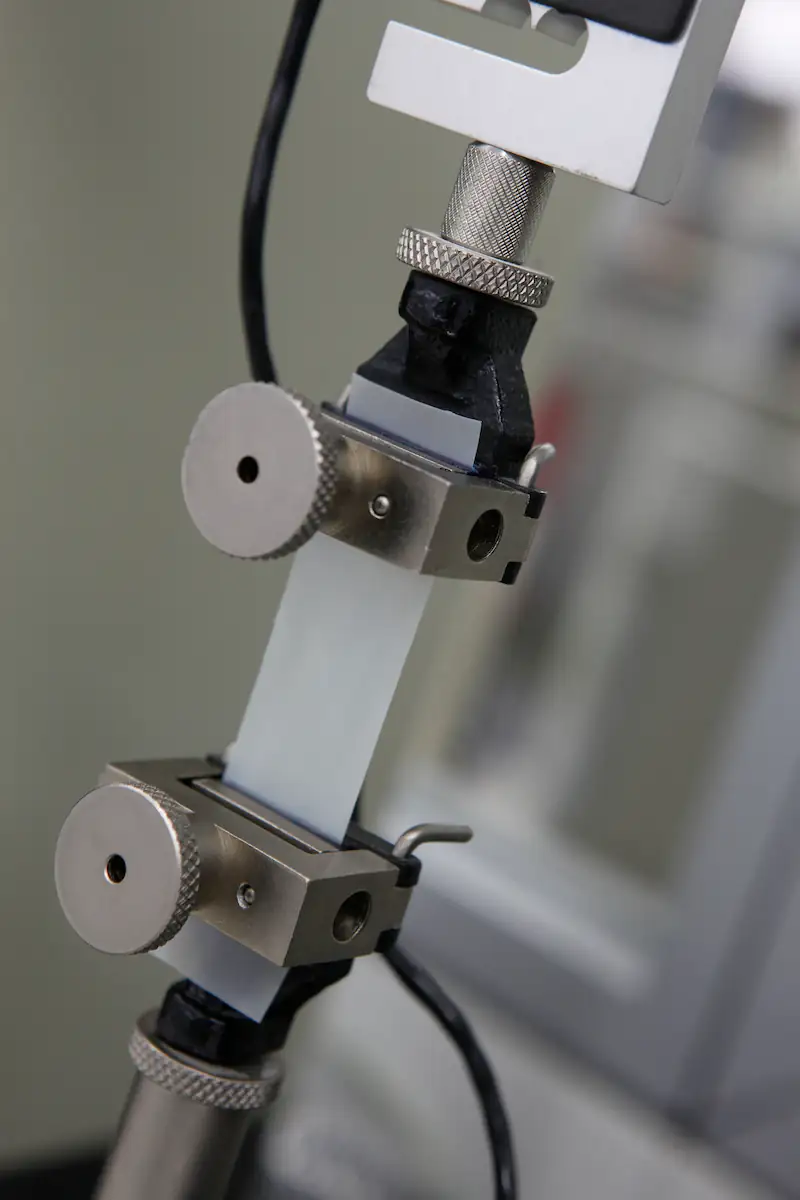
Creep tests are specialized evaluations that measure the tendency of materials to deform slowly under prolonged stress or constant stress. At Deon Research Centre, these tests are essential in sectors such as aviation, energy and construction, where materials are often exposed to constant stress over long periods of time. By performing creep tests, you can ensure the durability and reliability of your products. For reliable results, we work with standards such as ASTM E139 and ISO 204.
Why choose creep tests?
Do you want to guarantee the long-term structural integrity of your materials? Our creep test services offer:
- Accurate insight: understand how materials behave under long-term stress.
- Risk management: prevent unexpected material breakages and extend the life of your products.
- Reliable product optimization: Use test results to create robust and durable materials and designs.
How do creep tests work?
The process involves applying continuous load or stress to a material to evaluate the long-term deformations:
- Uniaxial creep test: measures how a material stretches or deforms under constant stress over a period of time.
- Creep and break test: evaluates the time to break of a material under specific load and temperature conditions.
During the crawl tests, we focus on important properties such as:
- Creep modulus: the degree of deformation of a material under constant stress.
- Time to break: how long a material can withstand before breaking under given circumstances.
- Distortion rate: The rate at which a material deforms over a specific period of time.
Applications of creep tests in industry
At Deon Research Centre, we are involved in the application of creep tests in various sectors:
- Aeronautics and space: tests the performance and durability of materials under constant pressure and high temperatures.
- Renewable energy: assess the lifetime of materials used in turbines and reactors that are exposed to high stresses and temperatures.
- Building and construction: ensure that the structural components resist crack propagation and stress corrosion.
What does this mean for your company?
By investing in creep tests, you will achieve:
- Increased product reliability and a longer lifespan of your products.
- Compliance with international standards that are essential for market acceptance and customer trust.
- Improved competitive position by delivering sustainable and safe products.

We offer comprehensive creep testing services at Deon Research Centre!
Wondering how our creep tests can help you improve your products? Our team offers expert services that ensure that your materials meet the highest quality standards. Contact us for more information and find out how we can support your business with in-depth material testing!
Contact us directly +31 (0) 6 51 06 02 62