
SEM-EDX at Deon Research Centre: Understanding the microstructure and chemical composition of materials

What is SEM-EDX?
SEM-EDX, or Scanning Electron Microscopy with Energy Dispersive X-ray Spectroscopy, is a powerful analysis technique that can investigate both the surface structure and elemental composition of materials.
At Deon Research Centre, we use SEM-EDX to characterize in detail the morphology, microstructure and chemical composition of a variety of materials — such as metals, polymers, coatings and composites.
This method is indispensable for:
- Material characterization and quality control
- Failure analysis and defect investigation
- Research into corrosion, adhesion and wear

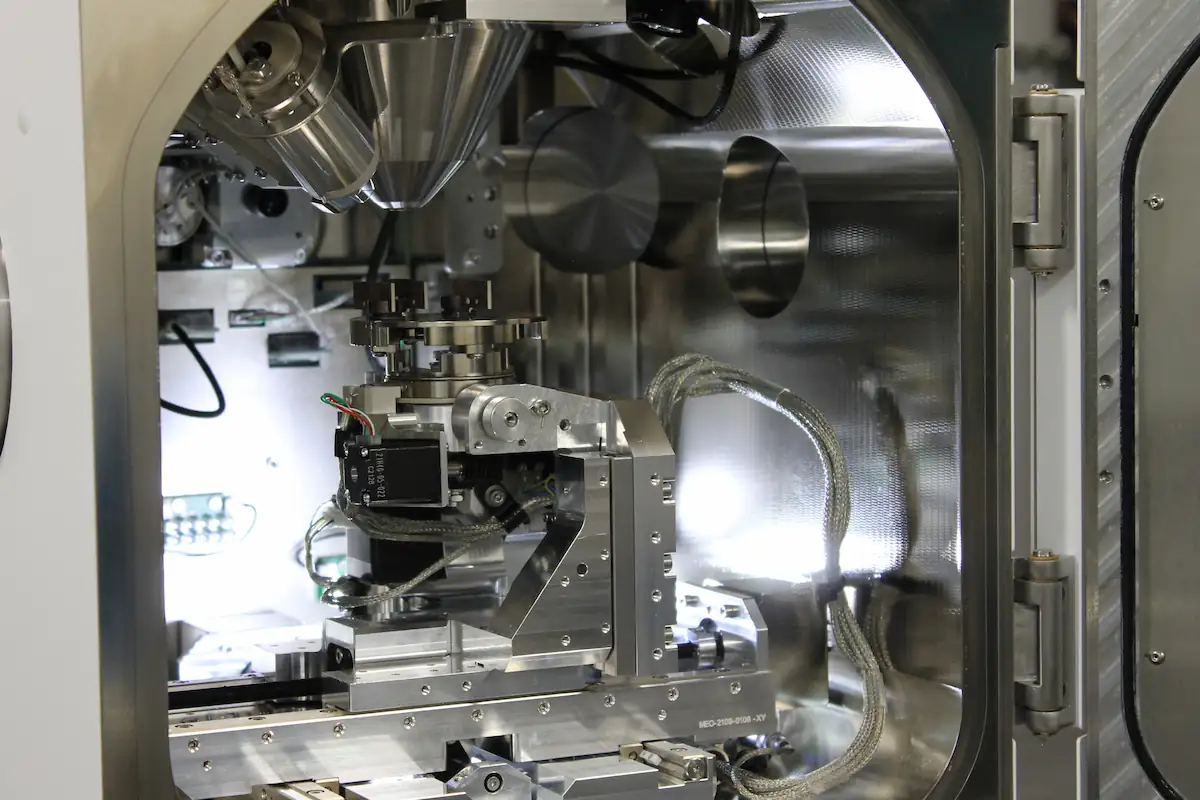
Why choose SEM-EDX at Deon Research Centre?
Our SEM-EDX analyses combine high resolution, sensitivity and material expertise, resulting in in-depth insight into material behavior and composition.
- Detailed imaging
Visualize microstructures, fracture surfaces, or coating surfaces down to the nanometer scale. - High-accuracy element analysis
Identify and quantify elements from boron to uranium, with high spatial resolution. - Research and quality control support
Ideal for failure analysis, adhesion testing, corrosion studies and material comparisons. - Can be used on various materials
Suitable for metals, plastics, ceramics, glass, coatings and composites.
At Deon Research Centre, we combine advanced SEM-EDX equipment with experienced materials engineers to provide reliable and reproducible analysis for both research and industrial applications.
How does SEM-EDX work?
The scanning electron microscope (SEM) uses a finely focused electron beam to scan the surface of a sample. When the electrons come into contact with the material, different types of signals are created — including secondary electrons, reflected electrons, and characteristic X-rays.
The EDX (Energy Dispersive X-ray) detector analyses these X-rays to determine the elemental composition of the material. This way, we can not only make high-resolution images, but also perform qualitative and quantitative element analyses down to the micro scale.
At Deon Research Centre, we combine SEM and EDX data to get a complete picture of:
- Surface and microstructure
- Element distribution and concentration profiles
- Contaminants, defects, or coatings
SEM-EDX applications in industry
The SEM-EDX technique is used in various sectors, including:
- Metal industry: research into microstructure, welding zones, corrosion and surface treatments.
- Plastics and composite industries: analysis of fillers, additives and fracture surfaces.
- Coatings and surface treatments: evaluation of adhesion, layer thickness and coverage.
- Failure analysis and quality control: identification of contaminants, inclusions, or production errors.
Our analyses provide practical insights that help with problem solving, product improvement and process optimization.
What does this mean for your company?
With SEM-EDX analysis at Deon Research Centre, you get detailed insight into the microstructure and chemical composition of your materials. Thanks to our advanced equipment and expertise in materials research, we provide reliable data for R&D, quality control and failure analysis — essential for developing sustainable and high-quality products.

Get in touch with us!
Are you interested in how SEM-EDX can improve your material analyses? Contact Deon Research Centre today for more information and find out how we can support your business with powerful and detailed materials research techniques!
Contact us directly +31 (0) 6 51 06 02 62